
Reading Again: How Reused Books Help the Planet
Reusing a book and recycling a book sound alike, but they are not the same thing. Reusing means someone reads it again, just as it is. Recycling means pulping it into paper. Both beat the bin, but reuse saves far more, because the paper, energy and transport that went into making the book are used again too. Our free doorstep book collection exists to give your books that second read.
The waste hierarchy
Reuse first, recycling second
The Waste (England and Wales) Regulations 2011 rank the ways of dealing with waste in order, from best to worst:
Prevent it
Buy less, borrow more and make things last.
Reuse it
Pass it on so it gets used again as it is. This is what donating your books does.
Recycle it
Turn the material into something new.
Recover it
Burn it to make energy.
Dispose of it
Landfill, the last resort.
A reused novel is still a whole novel. Recycling it turns it back into pulp, and each time paper is recycled its fibres get shorter and weaker, so they end up in lower-grade paper and card. A book passed on keeps every page working as a book.
Behind every new book
What goes into making a new book
A book looks simple, but a lot happens before it reaches a shelf. Every second-hand book read again means one less has to go through all of this.
Paper
Most new books start as wood, cut, chipped and pulped into paper. The pulp is cleaned, often bleached, then pressed and dried into large rolls or sheets.
Energy
Pulping, drying paper and running printing presses all take a great deal of energy. Then come the inks, glues and covers, and the binding that holds it all together.
Transport
Paper travels to the printer, sometimes overseas. Finished books travel on to warehouses, then to shops or to your door. Each leg adds to the book’s footprint.
Unsold new books often travel back again to be returned or pulped. A book that already exists has done all its travelling except the last short trip to a new reader.
What it saves
What reusing books saves
Every book read again rather than bought new saves the paper, energy and transport it would take to make a replacement. To give you a sense of scale, we use our own estimate for every kilo of books reused instead of made new:
Work out your own with the green calculator
This is an estimate, not a measurement. It is the cautious figure we use across our site for books kept in use rather than replaced, so it is meant to understate rather than overstate. A box of books weighing 10 kg, passed on rather than replaced, saves an estimated 10 kg of CO2e.
When reuse isn’t possible
When recycling is the right answer
Some books really are finished: soaked, mouldy, falling apart, or so marked and scribbled in that no one would want to read them. Those should be recycled, not binned. Many councils take paperbacks with your paper recycling, and household recycling centres usually take books too. Hardback covers are often a different material from the pages, so check your council’s rules first.
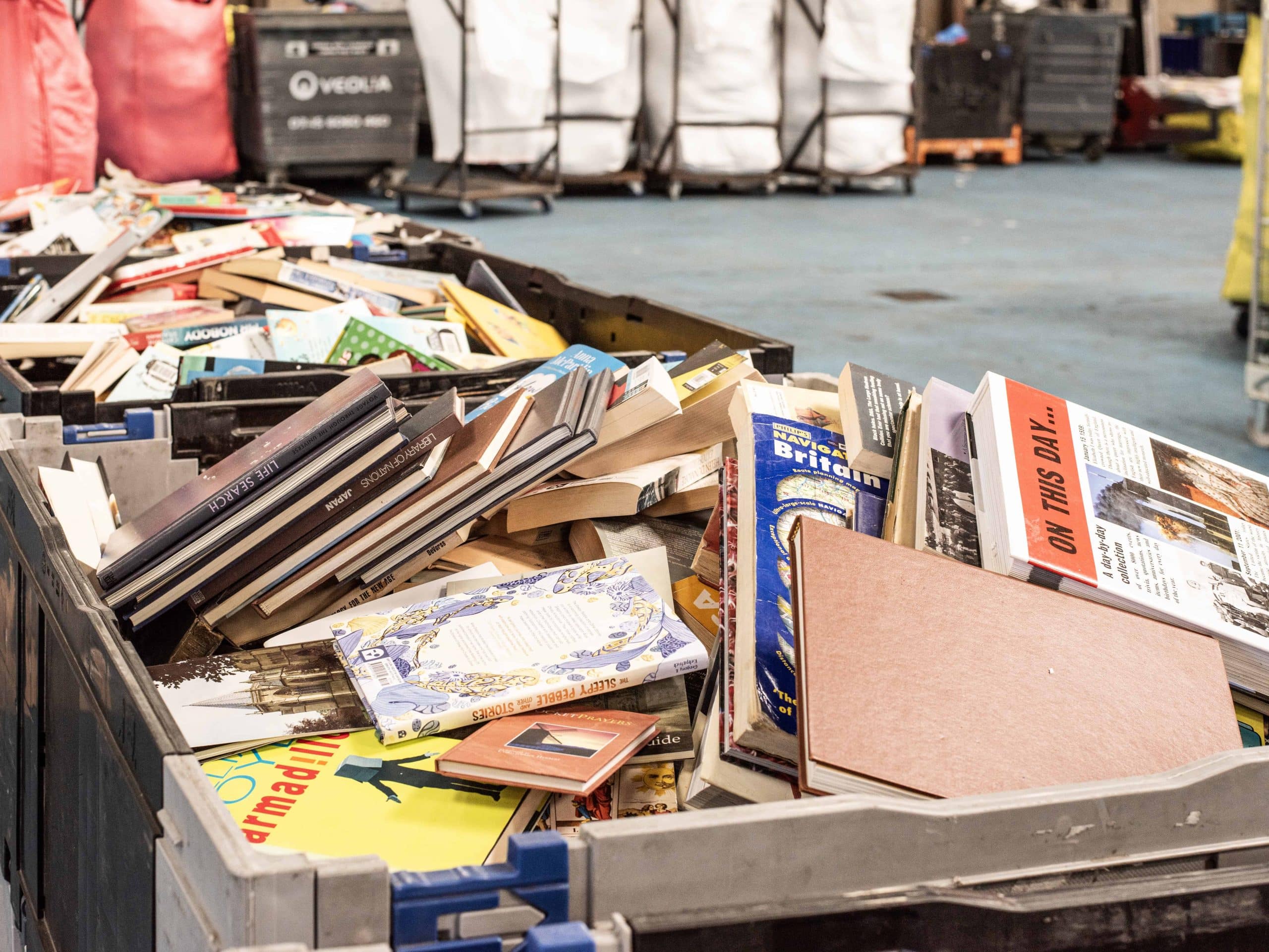
The books in our collections that can’t be re-homed go the same way. They are pulped and repurposed into recycled paper, which is far better than ending up at the local tip. Everything else is sorted by hand and passed on to readers who will enjoy it, including children’s books for the Children’s Book Project. Follow the whole journey on what happens to my books.
So which should you do?
- In good, readable condition? Donate it. Book a free doorstep book collection.
- Damaged beyond reading? Recycle it with your paper recycling or at a household recycling centre.
- Not sure? Check what books can I donate?
The one thing never to do is put good books in the bin. Why that matters is on why old books shouldn’t go in the bin.
Every day
Other ways to keep books in use
- Borrow from your local library before you buy.
- Buy second-hand, from charity shops, markets or online.
- Swap books with friends, family and colleagues.
- Pass on outgrown children’s books while they are still in good shape.
- Look after your books: keep them dry, out of strong sun, and use a bookmark rather than folding pages.
- Have a regular shelf clear-out, and pass on anything you won’t read again.
Every book you pass on gives someone else an affordable read and means one less made new. A large percentage of the proceeds goes to the charity you choose, and it is all collected free from your doorstep.


Sources
- The Waste (England and Wales) Regulations 2011, which set out the waste hierarchy.
- Our per-kilo estimate is the conservative factor we use across our site for books kept in use rather than replaced.
Ready to donate your books?
It’s free, you don’t need to be at home, and you choose the charity your donation supports.