
Why Old Books Shouldn’t Be Thrown Away
Putting an old book in the bin feels like the end of it. It isn’t. A binned book is buried or burned, and even the paper recycling bin turns it to pulp. Any reader who might have enjoyed it never gets the chance. If your book can still be read, donate it instead: we collect books free from your doorstep through our book donation service, and you choose the charity it supports.
Into the bin
What happens to books in the general bin
Your general waste bin doesn’t sort anything. Once the lorry has been, a book goes wherever the rest of the rubbish goes. Depending on your council, that means landfill or an incinerator.
Buried in landfill
Paper rots slowly when it is packed in with other rubbish and cut off from the air. As it breaks down it gives off methane, a powerful greenhouse gas.
More than paper
Glossy covers, laminated dust jackets, glue and inks all go into the ground along with the pages.
Burned
Rubbish that is burned is often used to make electricity. That beats landfill, but it still releases carbon, and a book that could have been read for years is gone in a moment.
The paper bin
Why recycling isn’t the answer for a readable book
Putting a book in the paper recycling feels like the right thing to do. For a book nobody can read any more, it is. For a book in good condition, it’s a waste.
Recycling doesn’t keep the book. The paper is soaked and broken down into pulp, and the spine, the glue and the cover are stripped away. The fibres come out a little shorter each time, so paper can only go round a limited number of times. Recycling also takes energy and water.
Some councils don’t take hardbacks in the paper bin at all, or ask you to remove the covers first. Check your council’s rules before you put any book in.
Reading a book again needs none of this. It just needs a new reader.
Hidden cost
The waste you can’t see
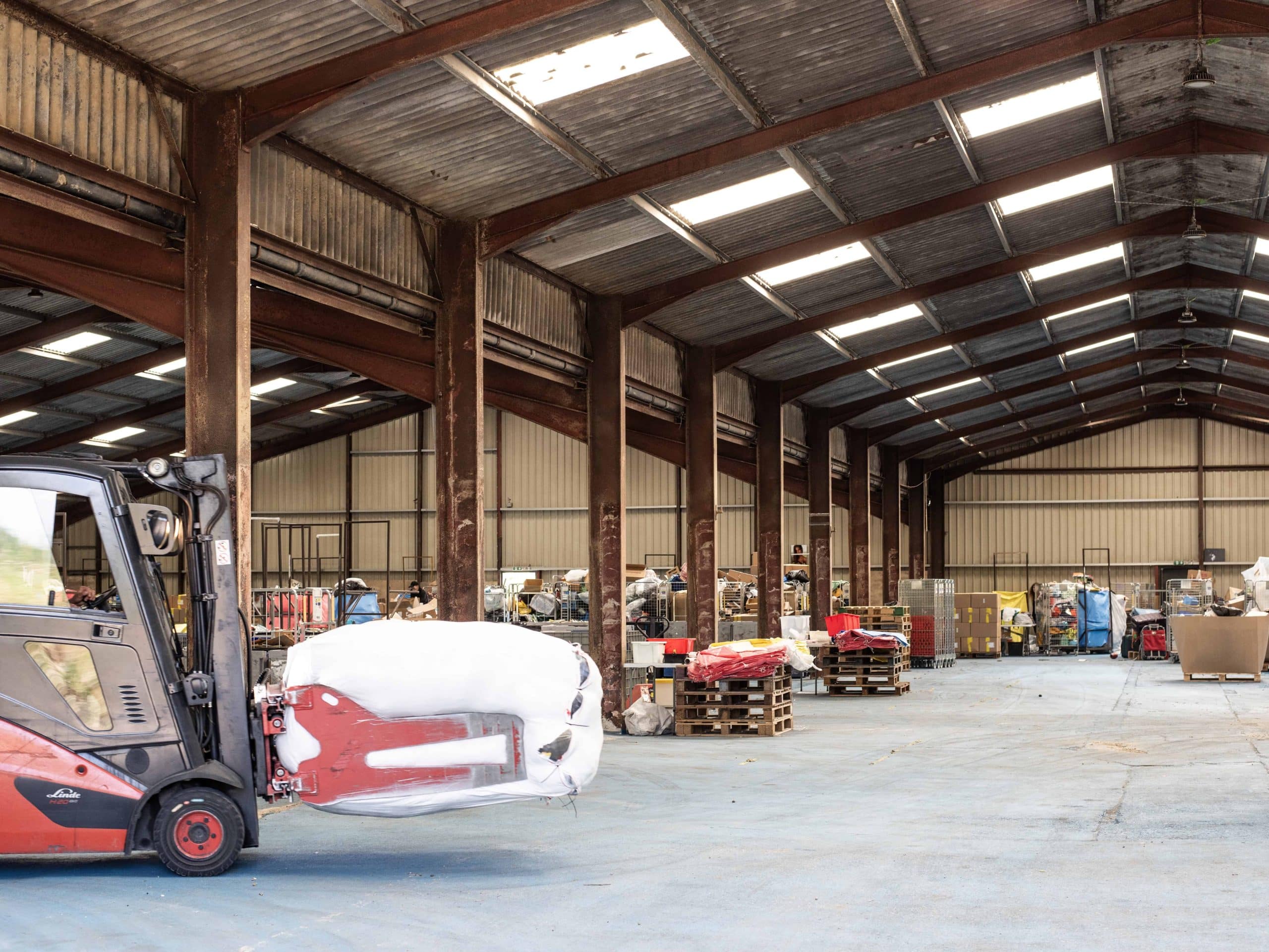
The biggest loss is everything that went into making the book. That means the trees and the paper mill, the ink and the printing, the binding, and the lorries that took it to a shop or warehouse. When a readable book is thrown away, all of that goes with it, and someone somewhere buys a new one printed from scratch.
By our estimate, every kilo of books read again instead of printed new saves about 1 kg of CO2e. It’s an estimate, but it adds up quickly across a few boxes. You can see roughly what your own clear-out could save on our green calculator. Why reuse beats a new print run is on how donating books helps the planet.
The answer
How donating stops it
Keep books in use for as long as they can be read. Every box that goes into a collection van instead of the bin is a book with a new reader waiting for it, and nothing to bury, burn or pulp.

Donate the books that can be read again
Book a free doorstep book collection, leave your books out by 7am, and we take them from there. You don’t need to be in. Most of what we collect is re-homed to new readers.
Recycle the books that can’t
Books that are mouldy, soaked or falling apart can’t be read again. Put them in the paper recycling if your council takes them, or take them to your local recycling centre.
Bin nothing that could be read
Not sure which pile a book belongs in? Check what books can I donate?
The simple test is good condition: not marked, stamped or drawn in. Beyond that, you don’t need to judge. We sort every collection by hand at our warehouse, and most of the books stay in the UK, re-homed to readers who will appreciate them. Books we can’t re-home are pulped and made into recycled paper, which is far better than the tip. You can follow the whole journey on what happens to my books?
Not just novels
It isn’t only paperbacks
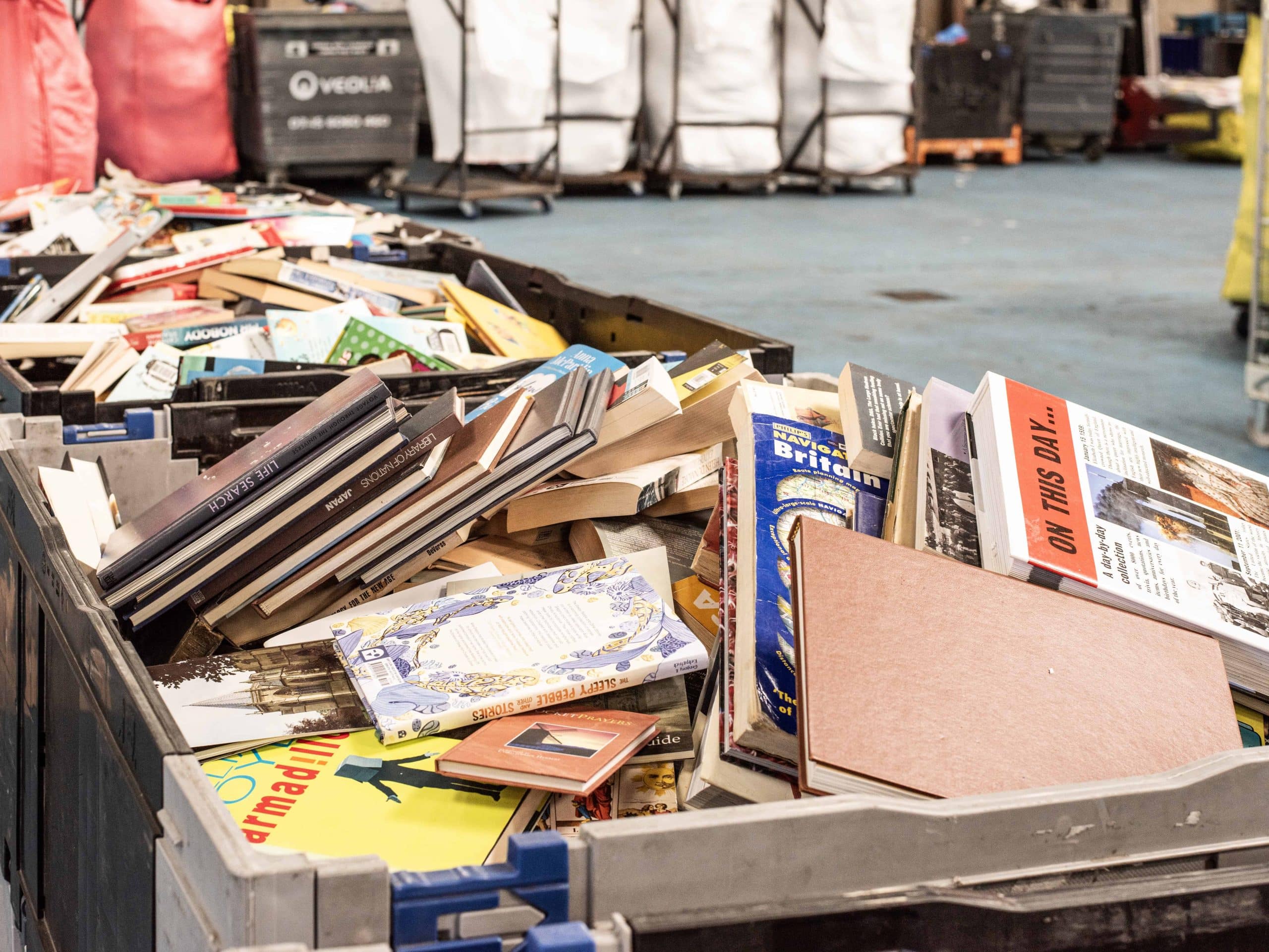
The books thrown away are often the ones people don’t think of as worth passing on. Outgrown picture books, last year’s textbooks and a shelf of cookbooks all took the same resources to make. So did a whole household collection cleared after a move. Every one of them could be read again.
- Children’s books, which can go on to The Children’s Book Project
- Fiction, novels and non-fiction
- Cookbooks and academic textbooks
- Whole household collections
If you have CDs and DVDs to clear as well, we can take those in the same collection.

The people your books reach, and the charity you choose, are on who do my books help?
Every day
Small changes that add up
- Borrow from your library before you buy.
- Buy second-hand when you can.
- Keep books dry: damp and mould are what ruin them.
- Pass a book on once you’ve finished it, while it’s still in good condition.

Related reading
More on donating books
- Donate your books: how our free doorstep collection works
- What books can I donate?
- What happens to my books?
- How does donating books help the planet?
Got books ready to pass on? Find your area on charity collections near you and book a free doorstep collection.
Ready to donate your books?
It’s free, you don’t need to be at home, and you choose the charity your donation supports.